Lead every exchange with evidence
Synthesize evidence, prepare scientific communications, and spot publication or landscape gaps with one evidence workflow.
Evidence, organized for the next conversation
See how EMET supports medical affairs teams focused on scientific exchange, evidence synthesis, and publication strategy.
Medical affairs capabilities
Explore a range of sample prompts and representative outputs from EMET across the workflows below.
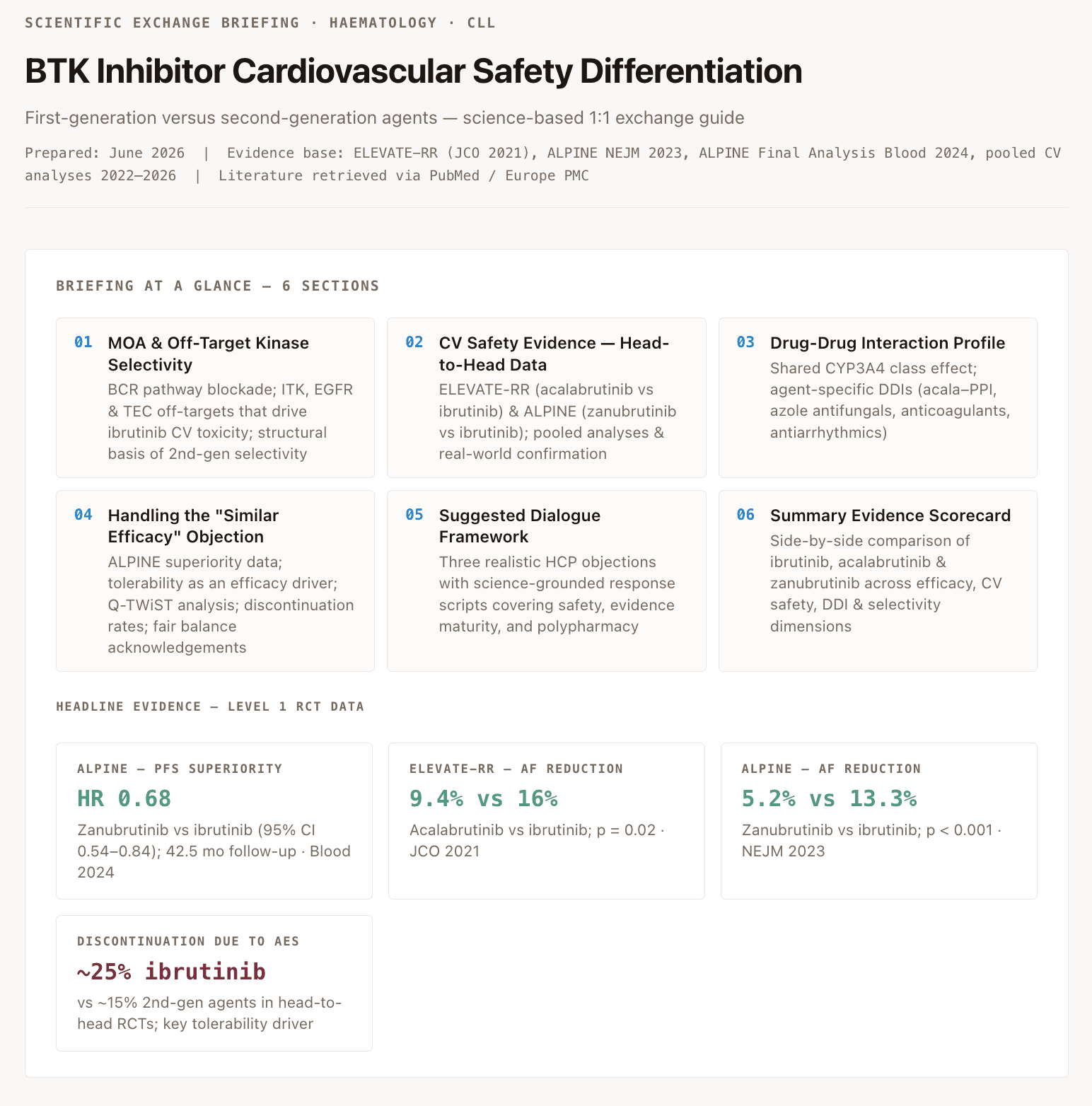
HCP Scientific Exchange Preparation
I have a 1:1 meeting with a senior haematologist who prescribes heavily in CLL. They want to discuss the cardiovascular safety differentiation between first- and second-generation BTK inhibitors. Prepare a science-based exchange briefing covering: MOA and off-target kinase selectivity, cardiovascular safety evidence including head-to-head data, DDI profile, and how to handle the 'similar efficacy' objection with appropriate fair balance.
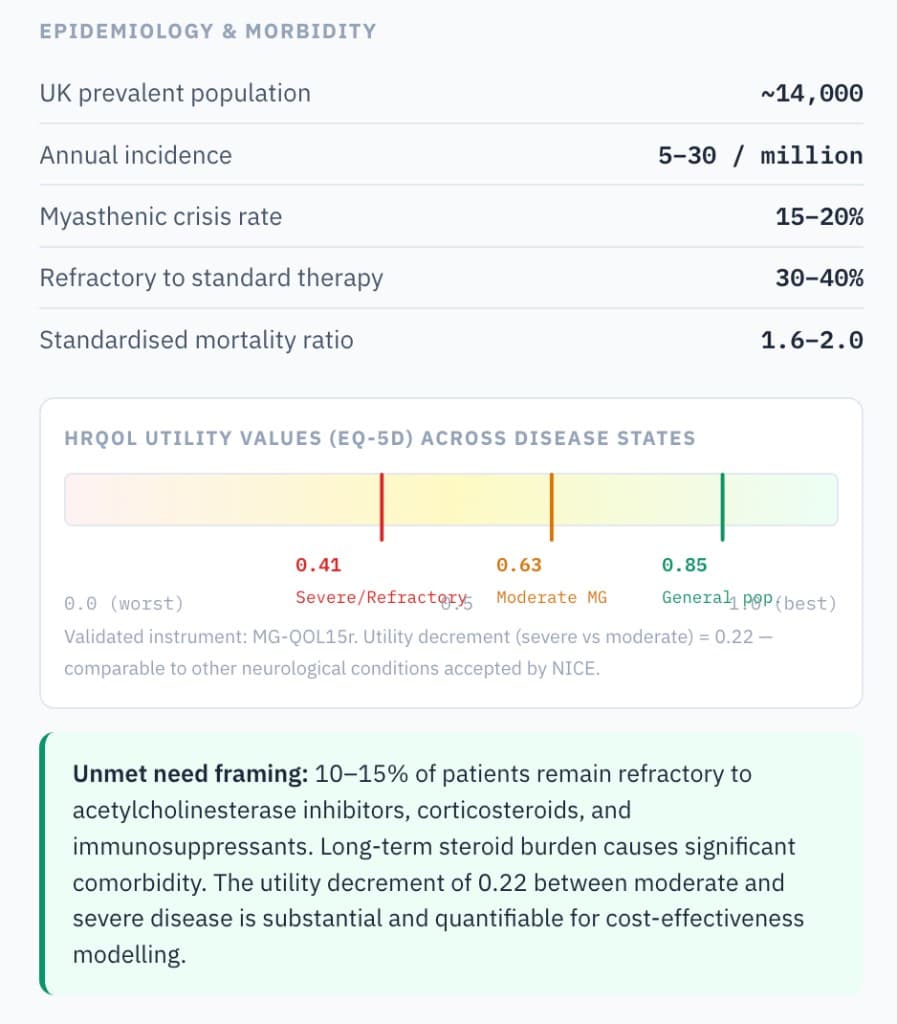
Burden of Disease Synthesis for HTA Dossiers
We are preparing a NICE Technology Appraisal submission for a new treatment in generalised myasthenia gravis. I need a comprehensive burden of disease evidence summary covering: epidemiology (UK prevalence and incidence), disease morbidity and crisis rates, mortality data, HRQoL instrument evidence with utility values, and a summary of current treatment gaps to support unmet need framing.
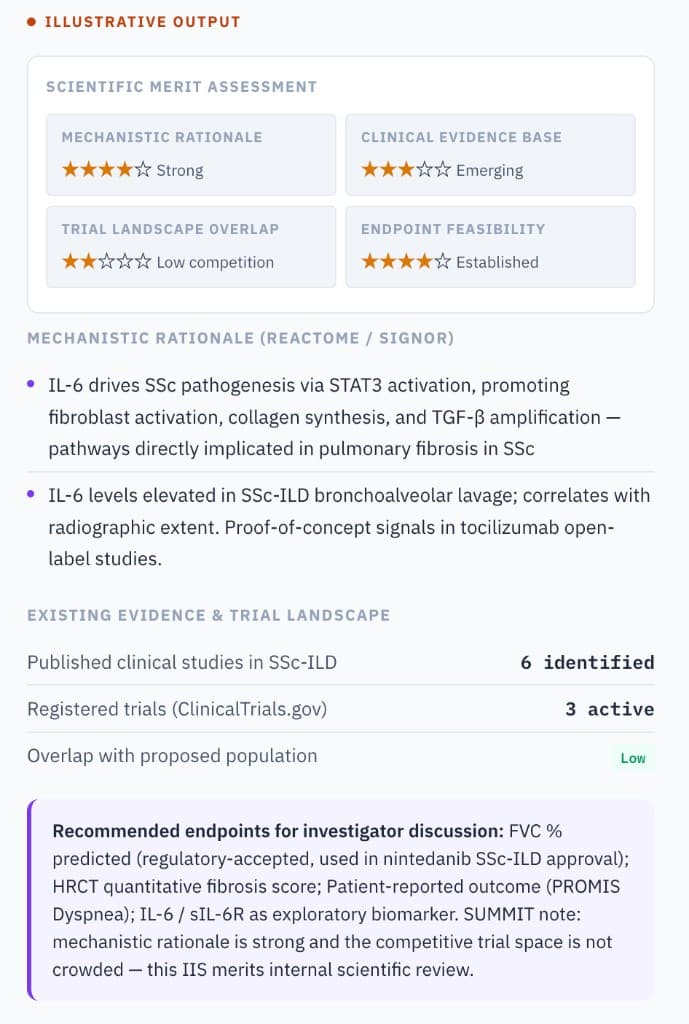
Investigator-Initiated Study Scientific Assessment
A pulmonologist at a major academic centre has submitted an IIS proposal to study our IL-6 receptor inhibitor in systemic sclerosis-associated interstitial lung disease (SSc-ILD). Assess the scientific merit: is there mechanistic rationale for IL-6R blockade in SSc-ILD, what does the existing clinical literature show, are there registered trials in this space, and what endpoints would be scientifically appropriate?
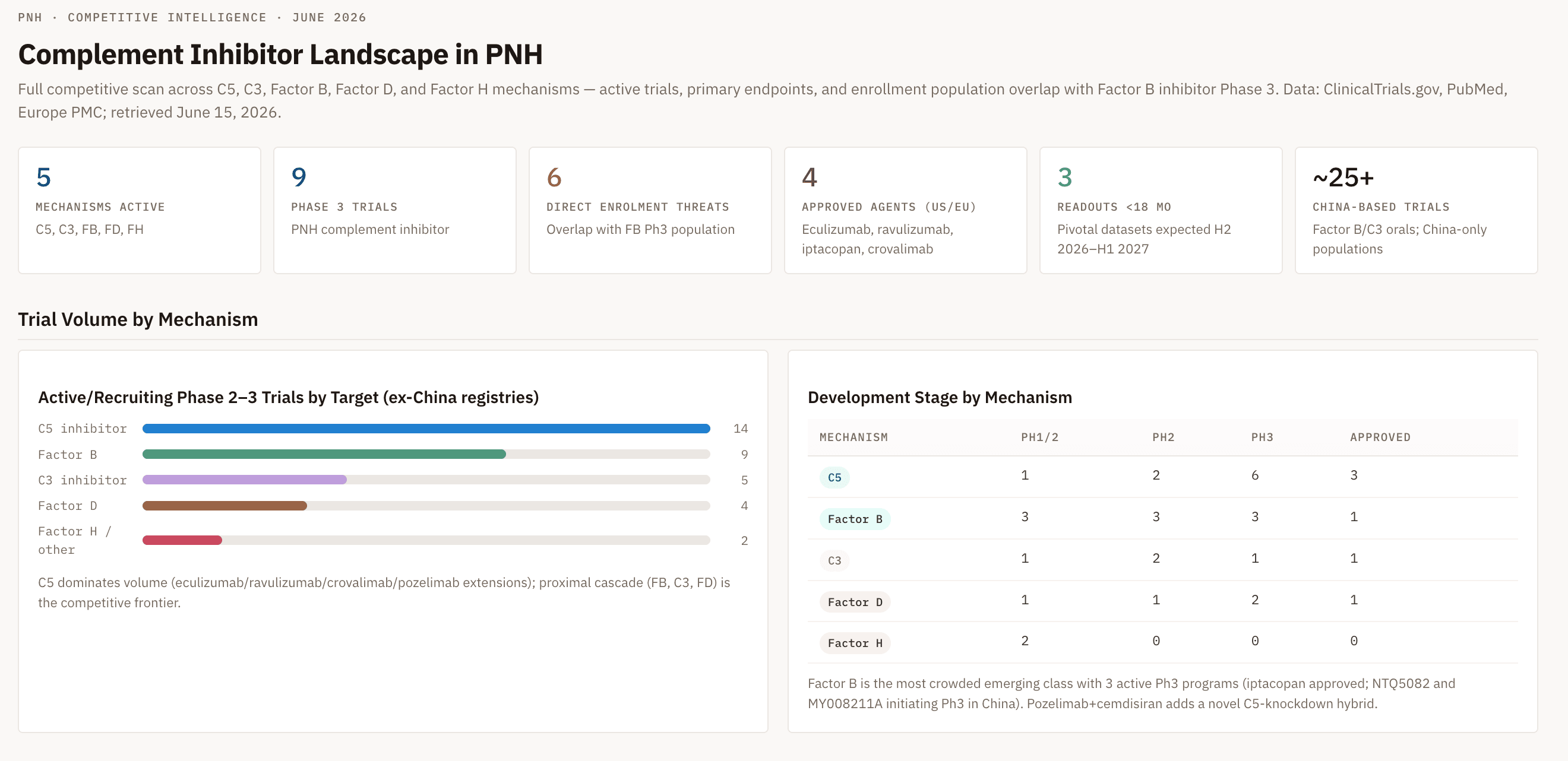
Competitive Clinical Trial Landscape & Pipeline Monitoring
We have a complement Factor B inhibitor in Phase 3 for PNH. Map the full competitive clinical landscape: all active trials across mechanisms (C5, C3, Factor B, Factor D, Factor H), the primary endpoints being used, development stage by mechanism, and key data readouts expected in the next 18 months. Flag trial designs that could directly compete with our Phase 3 enrolment population.
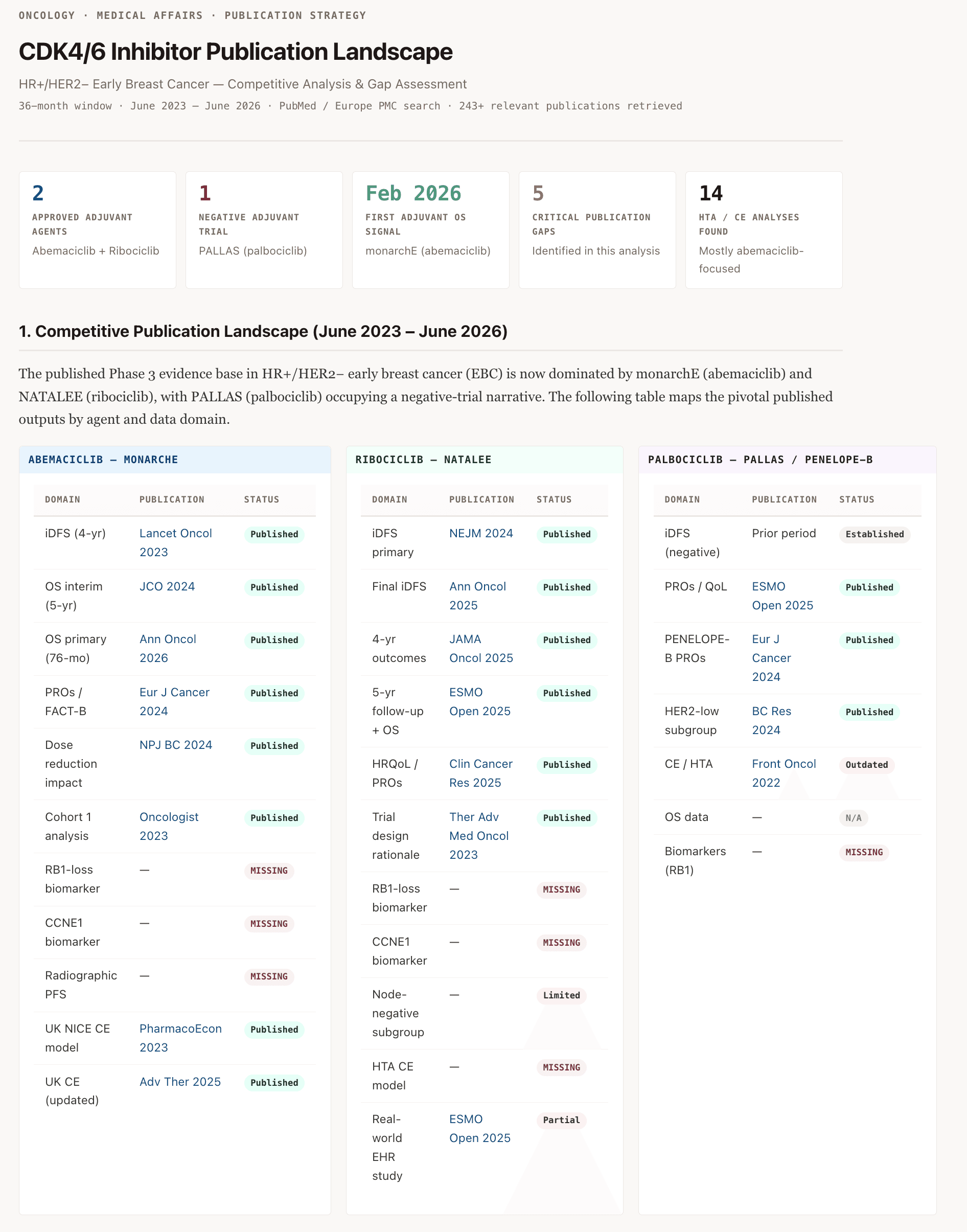
Publication Landscape & Strategic Gap Analysis
Our Phase 3 CDK4/6 inhibitor programme in HR+/HER2- early breast cancer has generated data on PFS, OS, PROs (FACT-B), radiographic progression, and biomarker subgroups (RB1 loss, cyclin E amplification). Analyse what we have published versus our two main competitors over the last 36 months. Identify our publication gaps and recommend where we should prioritise new publications for both scientific impact and market access value.
Frequently asked questions
Drug programs fail when biology is misunderstood. EMET exists to close that gap — before it closes your pipeline.
Start free trial